A new FPV drone simulation classroom has opened at Panevėžys “Minties” Engineering Gymnasium – the first facility of this kind in the city. The space introduces students to modern drone technologies that are increasingly relevant both in civilian fields and in national defence.
During the opening event, Panevėžys City Mayor Loreta Masiliūnienė highlighted the importance of such initiatives and thanked the school and partners for bringing cutting-edge tools directly into the learning environment.
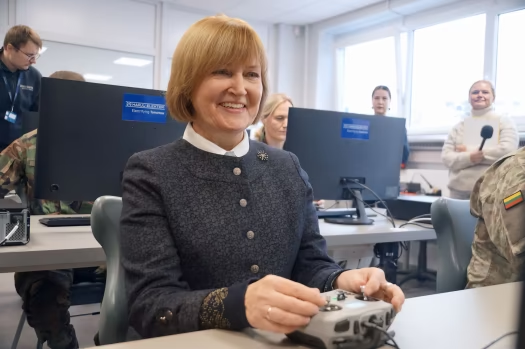
Mayor of Panevėžys Loreta Masiliūnienė.
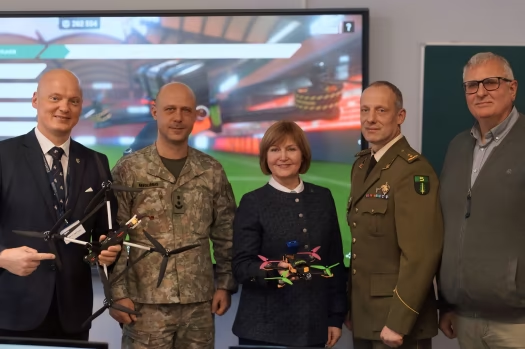
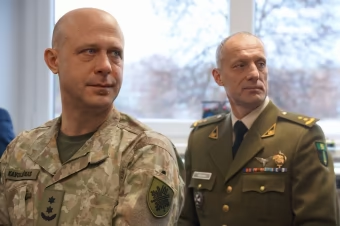
From left to right: MD of HARJU ELEKTER UAB Tomas Prūsas; Commander of the Vytis District 5th Battalion of the National Defence Volunteer Forces, Lt. Col. Audrius Kavoliūnas; Mayor of Panevėžys Loreta Masiliūnienė; Commander of the 5th Infantry Battalion of the Lithuanian Riflemen’s Union Valerijus Gruodis; Director of Panevėžys “Mintis” Engineering Gymnasium Mindaugas Libikas.
HARJU ELEKTER UAB contributed to the creation of the simulation classroom by providing equipment and software. Fifteen students have already started learning to operate FPV drones, and the classroom will later be used for teaching more advanced skills such as drone assembly and repair.
The space will also serve the wider community. Through cooperation with the Panevėžys Alfonso Smetona Riflemen 5th District and the KASP Vyčio District 5th Brigade, the classroom will be available in the evenings for the practical training of soldiers and riflemen. The systems installed here are the same as those used to train Ukrainian defence forces, allowing for realistic, modern preparation.
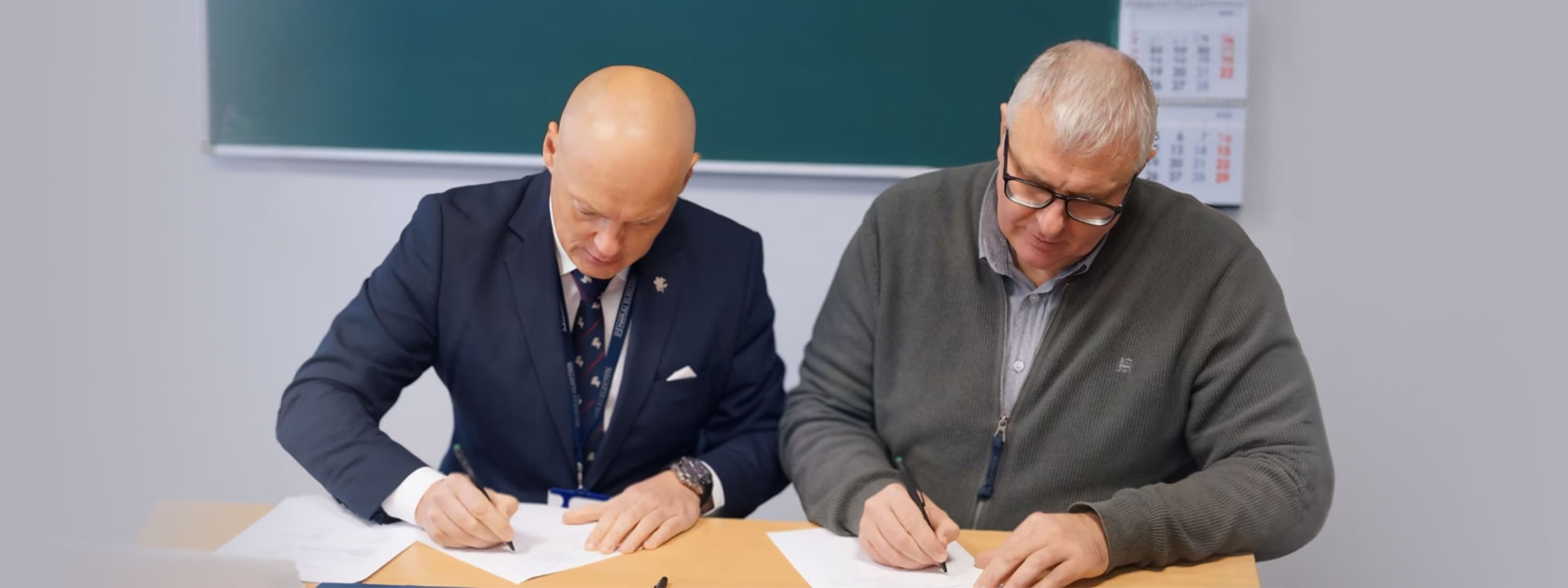
At the opening, cooperation agreements were signed with both military organisations. The agreements focus on strengthening civic education, raising awareness about national security, and building closer ties between the military and the public.
The classroom features 18 fully equipped workstations designed for both educational and practical training needs.
The FPV simulation classroom is part of a broader, ongoing collaboration between HARJU ELEKTER UAB and Panevėžys educational institutions. One of the most significant steps in this partnership was taken in 2023, when HE UAB donated a full computer classroom to the Panevėžys STEAM Centre and the robotics centre “RoboLabas”.
The donation included:
- Eight high-performance desktop computers,
- Solid Edge engineering and 3D design software,
- and training for teachers to help them integrate the software into their lessons.
The equipment was installed in the STEAM Centre’s Artificial Intelligence Application Laboratory – the only one of its kind in Lithuania at the school level. This space gives students access to real engineering tools and allows them to experiment with robotics, CAD design, electronics, and automation.
Solid Edge is widely used in global manufacturing and is the daily tool for HE UAB’s own engineers. Giving students access to the same technology helps them gain experience that is directly relevant to real industry work.
The STEAM Centre and “RoboLabas” have quickly become important spaces for young creators and engineers.
Students working there have already achieved impressive results, such as:
- Building and programming CNC milling machines that won 1st place in the VILNIUS TECH “Ateities inžinerija” competition.
- Designing award-winning 3D-printed vase accessories, recognised for creativity and precision.
- Creating a functioning Rube Goldberg–style machine that produced sweetened lemon lemonade, taking 1st place in the national “STEAM TEAM” championship.
- Teachers note that students are motivated, curious, and increasingly capable of carrying out complex engineering tasks independently.
We have continued supporting the centres by:
- modernising workstations in the “RoboLabas” Fab Lab,
- donating new soldering equipment,
- supporting robotics competitions and engineering clubs,
- and opening the doors of the company’s internal training academy to students once a month.
This cooperation has become a long-term partnership aimed at giving young people better access to technical education and real engineering experiences.
The opening of the FPV drone simulation classroom, combined with previous investments in STEAM and robotics education, reflects a shared vision between HARJU ELEKTER and the Panevėžys education community: to create an environment where young people can explore technology hands-on, develop engineering skills, and prepare for the future with confidence.
HE UAB remains committed to supporting initiatives that help young people grow, innovate, and discover their potential in the fields of engineering and technology.